
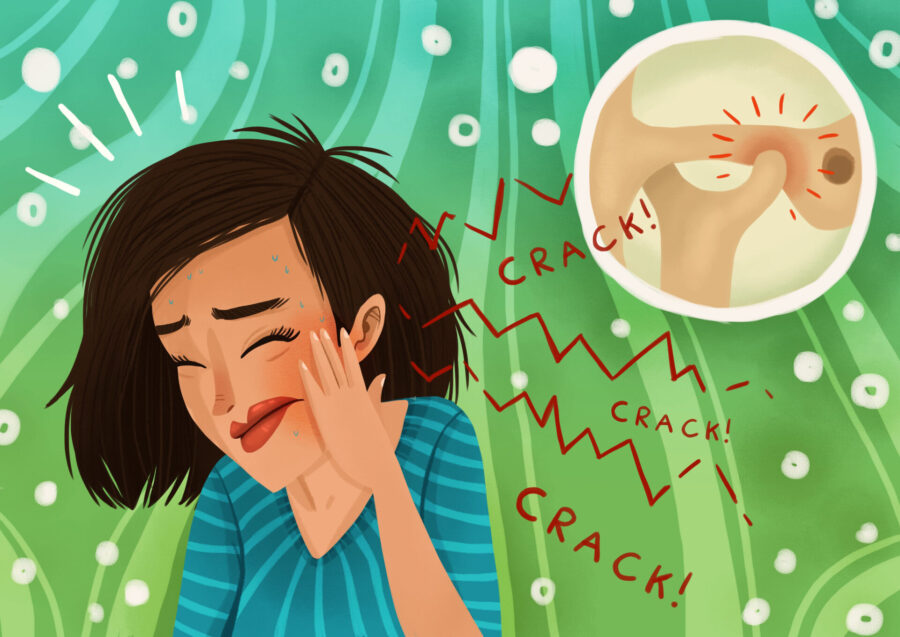
That little click or pop in your jaw when you chew or yawn might seem minor, but it often raises an important question: what’s causing it? For some people it’s occasional. For others, it’s every time they open their mouth.
At Farmington Dental and Orthodontics in Farmington, AR, Dr. Gavin Trogdon and Dr. Brittany Stroope evaluate jaw concerns like clicking, popping, stiffness, and soreness. Sometimes the sound is harmless. Other times, it’s a signal that the jaw joint needs attention.
Here’s what’s usually going on.
Understanding the Jaw Joint (TMJ)
Your jaw joint — called the temporomandibular joint, or TMJ — works like a sliding hinge. It connects your lower jaw to your skull and allows you to talk, chew, laugh, and yawn.
Inside that joint is a small disc made of cartilage. Think of it as a cushion that helps the bones glide smoothly. When that disc moves out of position or the joint isn’t tracking properly, you may hear clicking or popping.
The sound itself is often the disc shifting as your jaw opens and closes.
Common Reasons Your Jaw Clicks
Jaw noises can happen for several reasons:
- Disc Displacement: If the small cushion inside the joint slips slightly forward, it can snap back into place as you open your mouth. That snap is often the “click” you hear.
- Teeth Grinding or Clenching: Grinding (bruxism) puts constant pressure on the joint and surrounding muscles. Over time, that strain can affect how the joint moves.
- Bite Misalignment: When teeth don’t fit together evenly, the jaw may shift to compensate. That extra movement can create joint sounds.
- Muscle Tension: Stress doesn’t just live in your shoulders. Many people hold tension in their jaw, which can change how the joint functions.
Because Farmington Dental and Orthodontics combines general dentistry and orthodontic care, both Dr. Trogdon and Dr. Stroope can evaluate whether your bite alignment may be contributing to the issue.
When Clicking Is Harmless — and When It’s Not
A painless click that hasn’t changed over time is often more of a mechanical quirk than a serious problem. Many people have minor disc shifts without pain or damage.
However, you should schedule an evaluation if you notice:
- Jaw pain or tenderness
- Limited opening or locking
- Frequent headaches
- Ear pain or pressure
- Worsening popping sounds
- Facial soreness when chewing
Pain, stiffness, or locking are signs the joint may be inflamed or under strain.
What About Jaw Locking?
Sometimes clicking progresses to locking, where the jaw temporarily gets stuck open or closed. This can happen if the disc becomes more significantly displaced.
If your jaw ever locks and you cannot close or open it normally, that’s something to address promptly.
Can Orthodontics Help?
In certain cases, yes. If bite alignment is part of the problem, orthodontic treatment may improve how the upper and lower teeth meet, reducing strain on the joint.
Dr. Brittany Stroope evaluates bite relationships carefully before recommending any orthodontic solution. Not every clicking jaw needs braces or aligners, but if alignment is contributing to uneven pressure, it can be part of a long-term solution.
Treatment Options for Jaw Clicking
Treatment depends on what’s causing the sound. Options may include:
- A custom nightguard to reduce grinding pressure
- Bite adjustment or orthodontic evaluation
- Muscle relaxation strategies
- Anti-inflammatory approaches
- Monitoring if symptoms are mild and stable
Most cases are managed conservatively. Surgery is rarely needed for simple clicking without severe dysfunction.
Small Habits That Can Help
While waiting for an evaluation, you can reduce strain by:
- Avoiding gum chewing
- Limiting very wide yawns
- Cutting tough or chewy foods into smaller pieces
- Being mindful of clenching during stressful moments
Even simple awareness can reduce joint irritation.
Jaw Clicking and Popping Treatment at Farmington Dental & Orthodontics
Jaw clicking doesn’t automatically mean something is seriously wrong — but it shouldn’t be ignored if pain, stiffness, or locking develop.
At Farmington Dental and Orthodontics in Farmington, AR, Dr. Gavin Trogdon and Dr. Brittany Stroope take a comprehensive look at both the joint and your bite. Because they work together in one practice, they can assess both muscular and orthodontic factors contributing to TMJ symptoms.
If your jaw clicking has become more frequent, uncomfortable, or concerning, schedule an appointment to have it evaluated. Early assessment can prevent small issues from turning into bigger ones.
Image from Authority Dental under CC 2.0

