
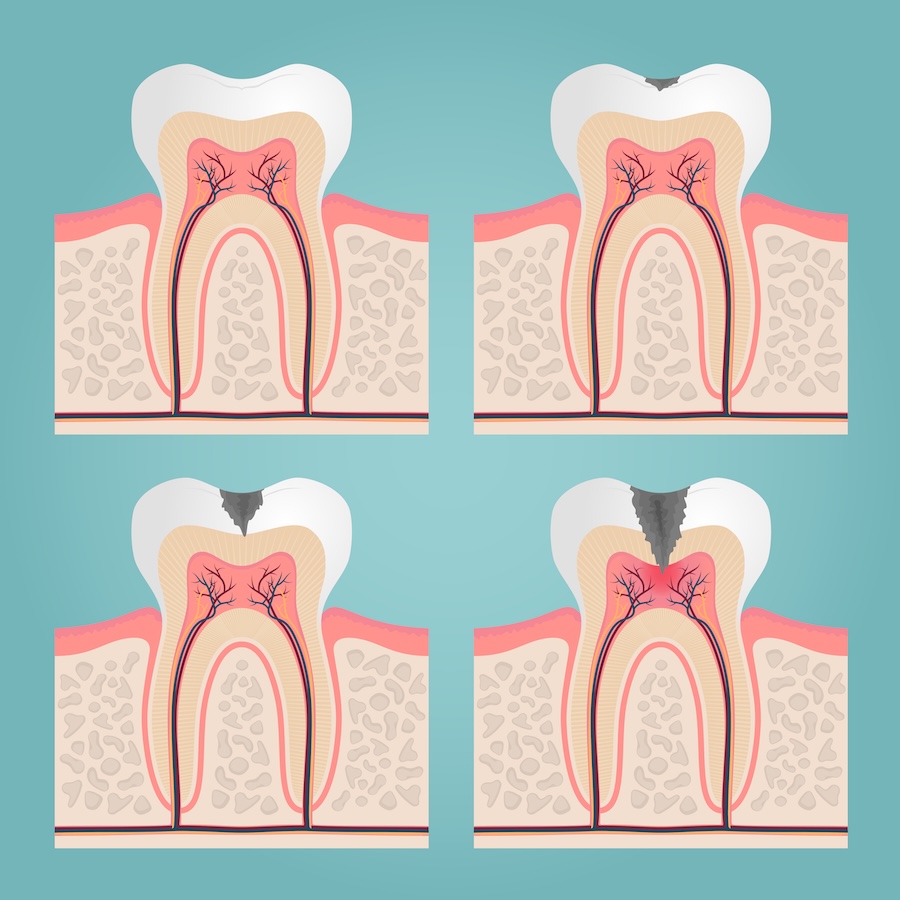
A cavity can be easy to put off when the tooth feels fine. You may leave the appointment intending to schedule a filling, then decide it can wait because eating and drinking still feel normal. However, decay can keep spreading beneath the surface before it produces a toothache, and the repair may become larger as more tooth is lost.
At Farmington Dental & Orthodontics in Farmington, Arkansas, Dr. Gavin Trogdon can show you where the decay is and explain why a filling is recommended. An early weak spot in enamel may need fluoride and monitoring, while a hole in the tooth often needs repair. If you need to put the appointment off, ask us about that tooth before deciding to wait for pain.
Early Decay and Cavities
Decay begins when acids produced by bacteria pull minerals from enamel. At an early stage, before the surface breaks down, fluoride and changes in habits can help the enamel regain minerals. We may recommend monitoring that area and adjusting prevention rather than immediately placing a filling.
Once enough structure has broken down to form a hole, the tooth cannot grow that missing area back. A filling removes the decayed tissue and restores the space with dental material. Brushing and fluoride still help protect the surrounding tooth, but they cannot rebuild a cavity that already needs repair.
A Cavity Without Pain
Enamel has no nerves, so damage limited to the outer tooth may cause little or no discomfort. As decay reaches the dentin beneath it, the process can spread through softer tissue. By the time you notice sensitivity, the repair may involve more tooth than it would have at the first exam.
This is why we check between teeth and around older fillings when X-rays are indicated. A cavity can develop where you cannot see it in the mirror. If you’re unsure why a painless tooth needs care, ask Dr. Trogdon to review the image and explain the area being treated.
When a Tooth Needs More Than a Filling
When a cavity is smaller, we may be able to repair it with a filling while preserving much of the surrounding tooth. If decay continues, it can leave thin walls or weaken a cusp, the raised part of the chewing surface. That tooth may then need more coverage to tolerate normal chewing.
In some cases, a crown or another larger restoration becomes necessary. The appointment and cost can increase because there is more damage to repair. We can explain how much sound tooth remains and why a filling may no longer provide enough support.
Decay That Reaches the Nerve
If bacteria reach the pulp, where nerves and blood vessels are located, the tooth can become inflamed or infected. You may develop lingering pain after hot or cold drinks, an ache without eating, or discomfort when biting. Swelling or an abscess can develop as the infection extends around the root.
A tooth with this kind of damage may need root canal treatment and a restoration if it can be saved. If too little healthy structure remains, extraction may be necessary instead. We’ll assess the tooth and explain the options, although earlier treatment may have allowed a simpler repair.
A Toothache That Goes Away
A toothache can fade if the tissue inside the tooth dies or an abscess begins draining. The tooth may feel better temporarily even while the infection remains. For that reason, canceling an appointment because the ache disappeared can leave the underlying problem untreated.
Contact us about swelling, a bad taste with drainage, or pain that returns after settling. Fever with facial swelling or worsening symptoms needs urgent assessment. If you have difficulty breathing or swallowing, seek emergency medical care immediately.
Delaying a Filling
If cost or scheduling is making it hard to book the filling, call us and explain what you need to work around. We can review how deep the cavity is and how soon it should be treated. A small cavity between teeth may change without you noticing, so we cannot promise it will stay the same until a date several months away.
If you or your child is also receiving orthodontic care, a cavity needs attention alongside the teeth being moved. With Dr. Trogdon providing family dentistry and Dr. Brittany Stroope providing orthodontics here, we can coordinate the timing when treatment overlaps. Keep brushing with fluoride toothpaste and cleaning between teeth as directed, including around any brackets, while you arrange the repair.
Cavity Treatment in Farmington, Arkansas
If you have a filling to schedule or a tooth that has started reacting to food, contact Farmington Dental & Orthodontics. Dr. Gavin Trogdon can check whether the decay has changed and explain the repair needed now. Schedule with our Farmington, Arkansas team, and let us help you take care of the cavity before more tooth is lost!

